Every Dasher hits the same crossroads eventually. You signed up to make a few extra hundred dollars a month, the income started looking real, and now you're staring at your DoorDash earnings dashboard wondering: should I just do this full-time?
Or maybe you're already running it full-time and feeling the burn wondering if scaling back to a side hustle would let you breathe again without tanking your finances.
There's no universal right answer. There is, however, a clear set of trade-offs that most "DoorDash earnings" articles skip over because they're trying to sell you on the dream. This post isn't that. This is the honest version: what actually changes when you cross the line from "extra income" to "this is my income," and why both paths have real costs that don't show up on your weekly Dasher payout.

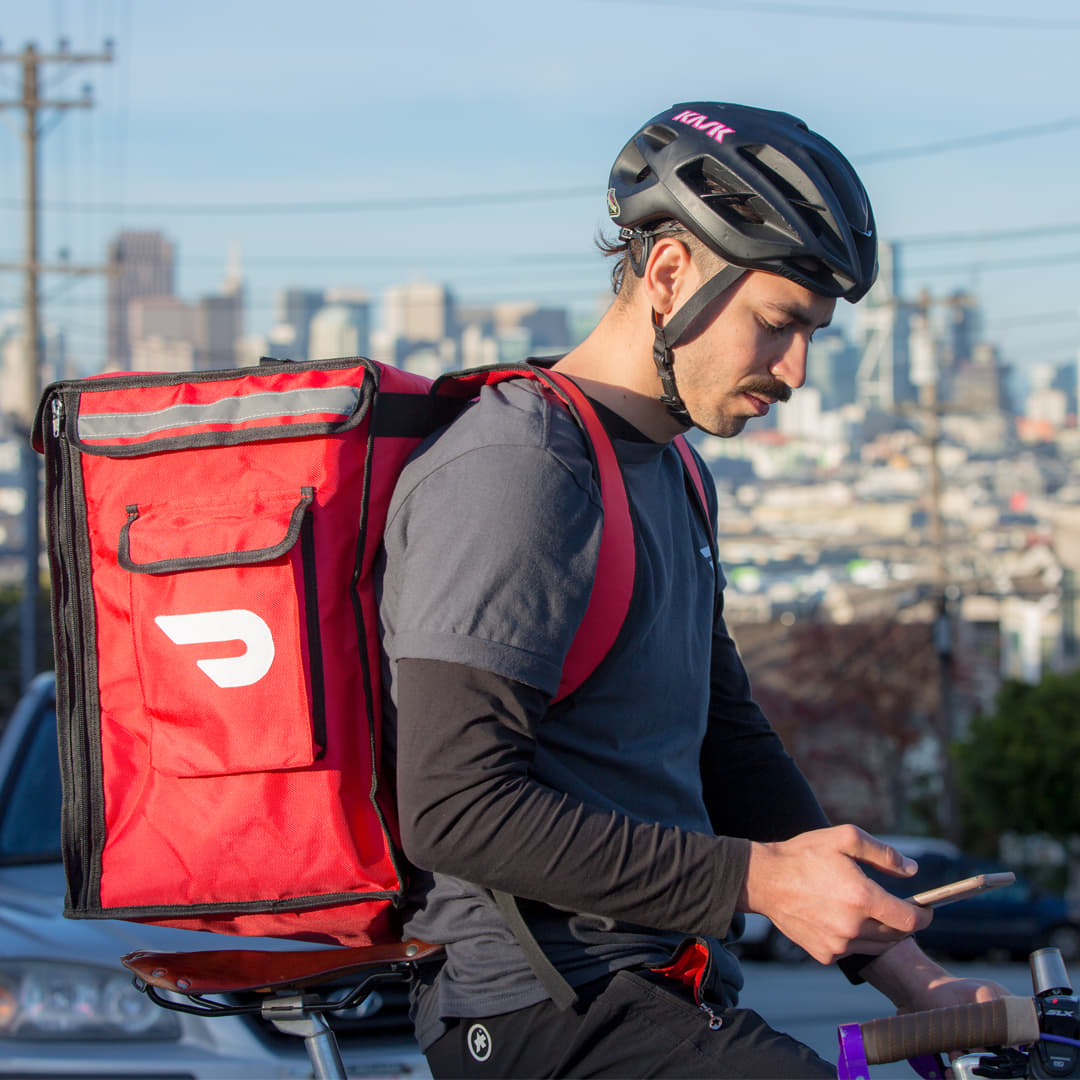
Side hustle Dashers typically run DoorDash for 5–20 hours a week, often clustered around evenings, weekends, and peak pay windows. They have a primary income source: a W-2 job, freelance work, school, retirement, or a partner's salary and DoorDash supplements it.
The classic side hustle setup looks like this: a few hours during the Friday and Saturday dinner rush, maybe Sunday afternoon, with occasional weekday evenings when the household needs an extra grocery run paid for. Earnings might land in the $200–$700 per month range depending on market and hours.
This is what the platform was originally pitched as, and it's still where most Dashers operate.
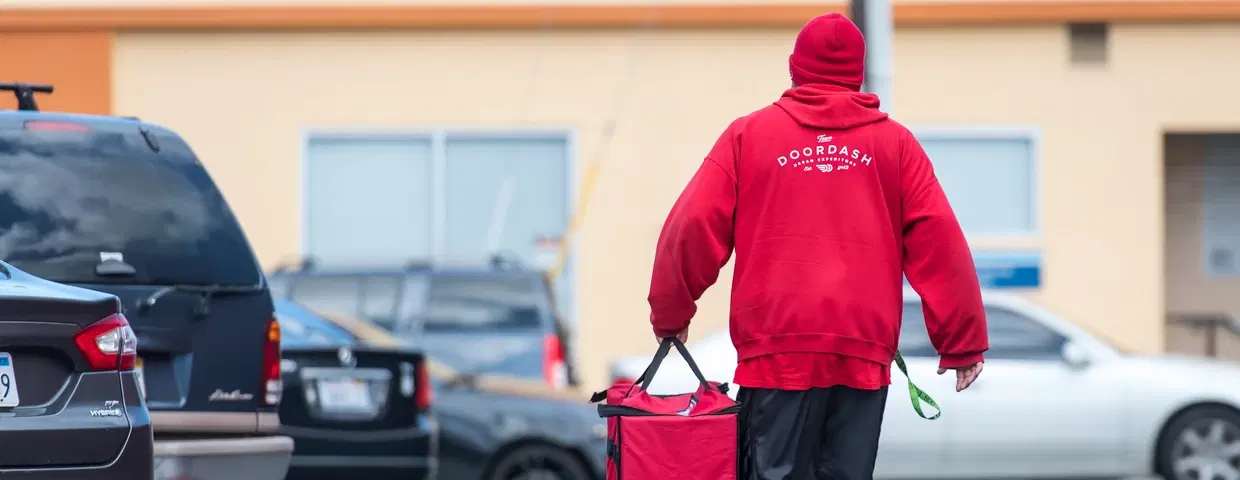
Full-time Dashers typically run 35–60 hours a week and treat DoorDash as their primary or sole income. They're online for both lunch and dinner rushes, often run weekends hard, and frequently multi-app running DoorDash alongside Uber Eats, Grubhub, Instacart, or Spark to keep their phones busy during slow periods.
A full-time Dasher in a decent market might earn $3,500–$6,000 per month gross, before gas, vehicle expenses, taxes, and self-employment costs. That's a real income, but as you'll see below, the "gross" number tells a misleading story.
When DoorDash isn't your main job, every dollar feels like a win. There's no pressure to hit a quota, no panic when a slow Tuesday means $40 in earnings, no anxiety about the algorithm shifting under your feet. You dash when you want money and stop when you don't.
Side hustlers can decline 80% of orders and still make their goals because they're not depending on volume. You can wait for the $9 short-distance offer instead of grinding through $4 stacks. Your acceptance rate will tank, but if you don't need Top Dasher status, it doesn't matter.
Health insurance, retirement matching, paid time off, disability coverage, your day job (or your spouse's) handles all of it. This is the single biggest hidden advantage of side hustling and it's almost never discussed.
Putting 80–150 miles a week on your car is a normal driving pattern. Putting 1,200 miles a week on it is a different category of wear-and-tear that compresses your vehicle's lifespan dramatically.
A few thousand dollars of side income means a Schedule C and some quarterly estimated payments are annoying, but manageable. Full-time self-employment taxes are a whole different beast.
If you only have 10 hours a week, you can't unlock the higher hourly rates that come from running multiple peak pay windows, learning your market deeply, and timing the algorithm. Side hustlers often earn less per hour than full-timers because they can't be in the right place at the right time consistently.
Coming home from a 9-hour day job and then putting in a 4-hour dinner shift on DoorDash sounds doable on paper. After three weeks, most people start questioning their life choices. Burnout from layered work is the silent killer of side hustles.
The most lucrative DoorDash hours Friday and Saturday nights, holiday rushes, and bad weather days often conflict with the rest of your life. Family dinners, kids' events, social plans, sleep. Side hustlers leave money on the table because they can't always be available when the platform pays best.
Even if you only drive for DoorDash 8 hours a week, the IRS still wants you to track every mile. Many side hustlers skip this and overpay on taxes by hundreds or thousands of dollars per year.
This is the headline benefit and it's not nothing. No boss, no shift manager, no requested-time-off forms. You decide when you start, when you stop, and when you take a Tuesday off because you feel like it. For people who've worked retail, food service, warehousing, or rigid corporate schedules, this freedom is genuinely life-changing.
Full-time Dashers learn things side hustlers never will: which DoorDash hot spots actually pay versus which are duds, which restaurants chronically run late, which apartment complexes burn 10 minutes finding the unit, which days of the month produce the best tips. This expertise compounds and can push hourly earnings well above what casual Dashers see.
Want to hit $6,000 this month? Run 60 hours a week, multi-app, and chase peak pay zones. The ability to directly trade more hours for more money is rarer in salaried jobs than people think.
You're not driving to a job and then driving for a job. Your commute IS the job, and it's compensated.
Full-time Dashers can deduct mileage at the federal standard rate (around 70 cents per mile), plus phone expenses, insulated bags, dash cams, and a portion of cell phone bills. Done correctly, these deductions can reduce taxable income significantly.
Here's the math nobody puts in the recruitment ads. A full-time Dasher grossing $5,000 a month might actually be netting closer to $3,200 after:
Gas: ~$500–$700
Vehicle depreciation and maintenance: ~$400–$600
Self-employment tax (15.3%): ~$760
Federal and state income tax: variable, often $300–$600
Health insurance (if buying independently): $300–$700+
That $25/hour earning rate suddenly looks more like $16–$18/hour after honest accounting. Still livable, but very different from the headline number.
This is the brutal part. Full-time Dashers have:
No employer health insurance
No paid sick days
No paid vacation
No 401(k) matching
No disability coverage if you get hurt and can't drive
No unemployment if DoorDash deactivates you
No workers' comp for injuries on the job
Get the flu? You don't earn. Get rear-ended? You don't earn AND your car might be out of commission. Need surgery? Pray you bought your own insurance through the marketplace.
Driving 50,000+ miles per year accelerates everything. Tires, brakes, transmission, suspension. Cars built for 12,000 miles a year of normal driving are now eating that mileage every 10 weeks. Your "earning" vehicle becomes a depreciating asset that loses resale value faster than your earnings can replace it.
DoorDash can change its pay structure, deactivate Dashers, adjust peak pay rules, or shift order volume in your market without warning. Side hustlers shrug at these changes. Full-timers get blindsided. Many veteran Dashers will tell you the "good old days" of higher base pay are gone, and there's nothing stopping further changes.
Full-time Dashers report higher rates of weight gain (sitting in a car for 50 hours a week, eating fast food), back pain, isolation, and low-grade depression. The freedom of self-employment can flip into loneliness fast when your only daily human interaction is "thanks, have a good night" through a doorbell camera.
Try walking into a bank and asking for a mortgage with "DoorDash" as your employer. Full-time gig workers face significant challenges securing apartments, auto loans, and home loans because traditional underwriting wasn't designed for variable 1099 income. You'll need two years of tax returns and a lot of patience.
There's a third option most articles ignore: deliberately running DoorDash as a side hustle while working part-time elsewhere, say, 25 hours a week at a job with benefits, plus 15–20 hours of dashing. This gives you:
Health insurance through the W-2 job
Stable base income
Retirement matching (if offered)
DoorDash flexibility on top
Lower vehicle wear than full-time
Many former full-time Dashers eventually settle into this model after burning out. It's less glamorous than "I quit my job to dash full-time" but it's often the financially smarter long-term play.
Ask yourself these questions honestly:
Do I have health insurance from another source? If not, full-time dashing is significantly more expensive than it appears.
What's my vehicle situation? Is it paid off, fuel-efficient, and reliable? Or are you about to put 60,000 miles on a financed car?
Do I have an emergency fund? Six months of expenses minimum before considering full-time. Three months on the absolute floor.
How's my market? Some cities support full-time dashing comfortably. Others top out at $15/hour even for the best Dashers. Track your real earnings for a month before committing.
What's my exit plan? Full-time dashing can be a bridge between jobs, while building a business, during school. It's a tougher sell as a 10-year career.
Side hustle dashing on DoorDash is, for most people, the financially smarter choice. The math just works better when your benefits, stability, and base income come from somewhere else.
Full-time dashing makes sense for a smaller group: people in strong markets with paid-off vehicles, low expenses, secondary insurance access (a spouse's plan, for example), and a clear plan for what comes next. For these Dashers, the freedom is real and the income is sufficient.
For everyone in between and that's most people, the hybrid path of part-time work plus serious side hustling is often the move that nobody talks about but that quietly outperforms both extremes.
Whatever you choose, run the real numbers. Track your gas, your miles, your taxes, your hours. The DoorDash app shows you a generous-looking weekly payout. Your spreadsheet will tell you the truth.
Then decide.
Receive a weekly newsletter with the latest and most interesting content.